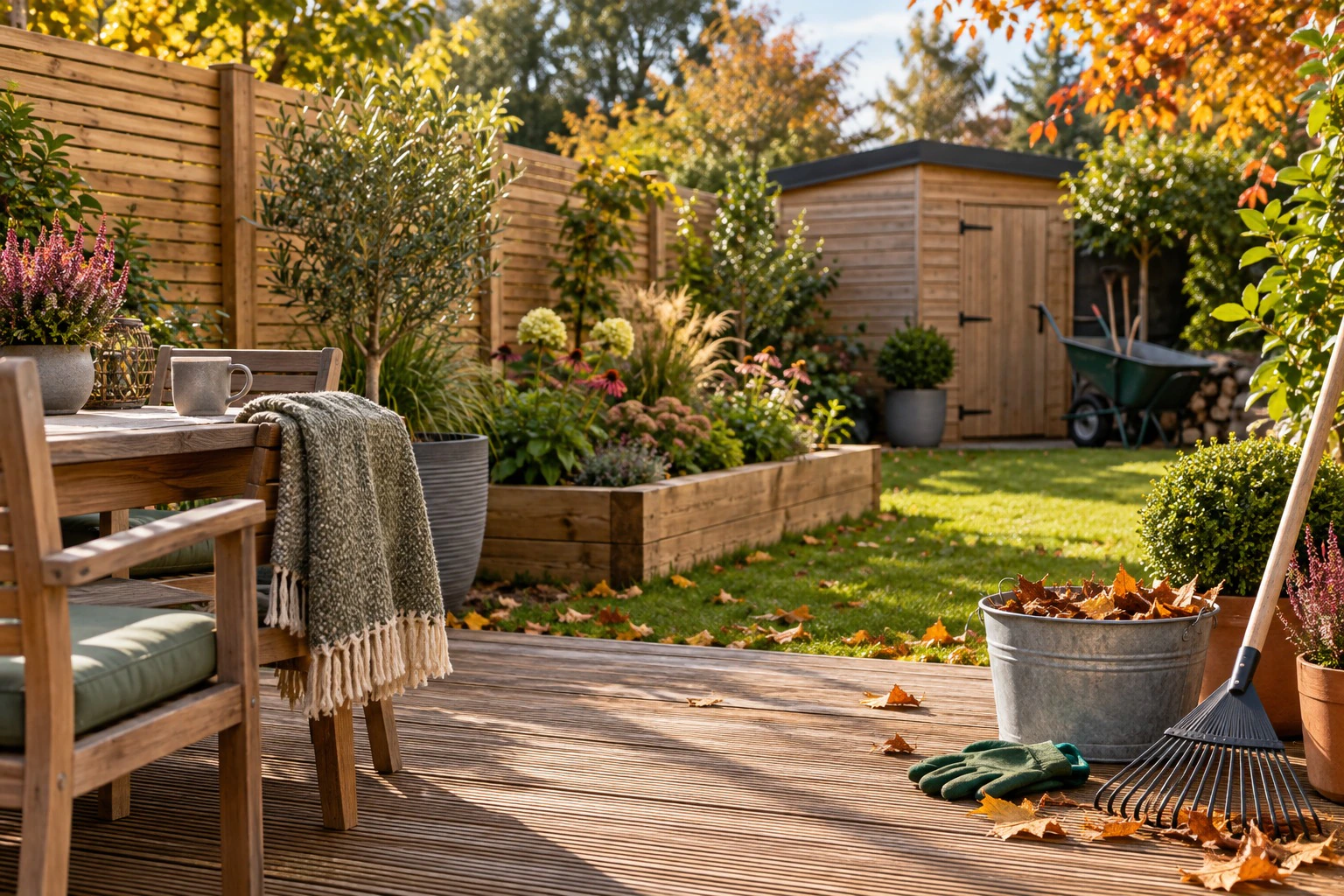
As summer begins to wind down, it’s a good time to turn your attention to those garden jobs you’ve been putting off.
Late summer provides a useful window for getting outdoor spaces in order before the wetter and colder months arrive. From checking your fencing to cleaning your decking and finishing landscaping projects, a little work now can help protect your garden and make life easier when spring comes around again.
So, what are the last garden jobs worth tackling before autumn?
Check Your Fencing for Damage
Your fencing has probably had a relatively easy few months, but autumn and winter can bring stronger winds and prolonged wet weather.
Before conditions change, walk around your garden and check your fence posts, panels and fencing battens for signs of movement or damage. Look out for loose boards, unstable posts, cracked timber and fixings that have started to work themselves loose.
A fence that only moves slightly now could become a much bigger problem during the first autumn storm.
Late summer is therefore a good time to replace damaged sections or finally complete that fencing project you’ve been considering. Timber fencing can also be used to add privacy or divide a larger garden into separate areas, so repairs can be combined with improvements to the overall layout.
If you're replacing or creating a contemporary fence, P.A.R. fencing battens can provide a smooth and more refined finish.
Give Your Decking Some Attention
After months of barbecues, garden furniture and regular foot traffic, your decking may be ready for some maintenance.
Start by removing furniture, plant pots and other items before giving the surface a thorough sweep. Clear leaves and other debris from between boards, paying particular attention to areas where moisture could collect.
Timber decking should also be checked for loose boards, damaged sections or protruding fixings. Dealing with small issues before autumn can prevent them from becoming more troublesome over winter.
If you have timber decking that requires a protective finish, late summer can provide an opportunity to carry out maintenance while there are still periods of dry weather. Always check that the treatment you're using is suitable for your particular timber and follow the manufacturer's application instructions.
Composite decking generally requires less maintenance, but it can still benefit from a good clean before autumn.
Finish Those Landscaping Projects
Have you spent the summer looking at a half-finished flower bed or an area of the garden that still needs defining?
Now is the time to get it finished.
Timber sleepers are particularly useful for landscaping because they can be used to create raised beds, borders, steps and retaining features.
Raised beds can help give a garden more structure and make different planting areas easier to manage. They're also a practical way to transform awkward or unused areas of a garden.
Completing these jobs now means your garden structure is already in place when you're ready to start planting and improving the space again.
Tidy Up Raised Beds and Borders
Late summer is also a good opportunity to tidy existing beds and borders.
Remove weeds before they have another chance to spread, clear away dead or struggling annual plants and trim back plants where appropriate. You can also remove debris that has accumulated around timber edging and raised beds.
While you're doing this, check the condition of any timber used around the beds.
If existing boards or sleepers are badly deteriorated, replacing them before winter can help keep borders neat and prevent soil from spilling onto lawns and pathways.
Check Garden Structures and Timber Cladding
Don't forget about sheds, garden rooms, home offices and other timber structures.
Take a walk around the exterior and look for loose or damaged boards, gaps, damaged trims and areas where water could potentially collect.
If your garden building uses timber cladding, maintenance requirements will depend on the timber species, finish and installation. Some timber is intentionally allowed to weather naturally, while other products may require periodic treatment to maintain their appearance.
The important thing is to spot problems early rather than discovering them after several months of wet weather.
Late summer can also be a good time to replace damaged cladding or give an older shed or garden room a new look.
Clear Leaves and Debris Before They Build Up
You don't need to wait until autumn is in full swing to start clearing debris.
Leaves, twigs and dirt can collect around decking, fencing, drains and the bases of garden structures. When these remain wet for long periods, they can trap moisture against surrounding materials.
Regularly sweeping decking and pathways and keeping the bases of timber structures clear is a simple job that can make ongoing maintenance much easier.
Pay particular attention to drainage areas too. Gutters, channels and drains should be kept clear so that heavy autumn rain has somewhere to go.
Secure Garden Furniture and Outdoor Items
Summer often means gardens are filled with furniture, parasols, children's toys, planters and barbecue equipment.
Before autumn winds arrive, decide what can stay outside and what needs to be moved into storage.
Items that remain outdoors should be secured where necessary, while furniture can be cleaned and covered or stored according to the manufacturer's recommendations.
It's also worth moving plant pots and furniture around while cleaning your decking or patio. This gives you an opportunity to check areas that may have remained covered for most of the summer.
Complete Small Timber Projects While the Weather Allows
There always seems to be one garden project that doesn't quite get finished during summer.
Perhaps you wanted to add a privacy screen, create a raised planter, repair a fence or improve the area around your decking.
Completing these smaller projects before autumn means you won't have to tackle them in colder, wetter conditions.
Timber can be used for everything from fencing and raised beds to seating areas, screens and decorative landscaping features, making relatively small projects capable of changing how a garden looks and functions.
Is Late Summer a Good Time to Prepare Your Garden for Autumn?
Yes. Late summer is an ideal time to inspect your outdoor space and deal with maintenance jobs before the weather becomes less predictable.
Focus on the areas that will be most exposed during autumn and winter, including your fencing, decking and outdoor timber structures. Fixing a loose fence post or damaged decking board now is generally much easier than dealing with a larger problem after bad weather.
You don't need to completely redesign your garden. A few practical jobs can leave it looking tidier, help protect outdoor features and put you in a much better position when spring returns.
Get Your Garden Ready for the Changing Seasons
From repairing fencing and refreshing decking to completing raised beds and other landscaping projects, there is still plenty you can achieve in the garden before autumn arrives.
At Timber Living Company, you'll find a wide range of timber and landscaping products suitable for garden projects, including decking, fencing, fence posts, sleepers and cladding.
Get those final jobs ticked off now, and you can head into autumn knowing your outdoor space is ready for the months ahead.
Comments (0)
There are no comments yet.